

Wildlife Monitoring in the Yangambi Landscape: technology, science and communities serving biodiversity
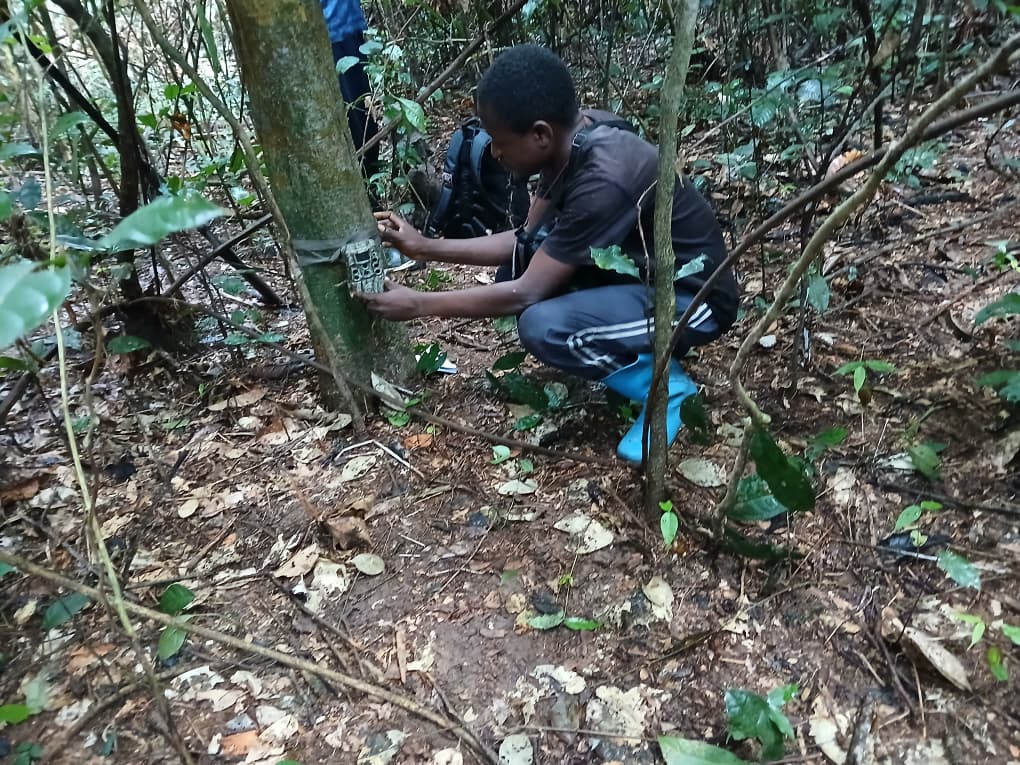
After the capacity-building workshop on wildlife monitoring techniques using camera traps, environmental DNA (eDNA) analysis and SongMeters, the next phase involved deploying the research equipment in the field. This workshop was held in Yangambi on 15 July 2025 as part of the Sustainable Wildlife Management (SWM) programme, coordinated by CIFOR-ICRAF in partnership with SO WILD. The training was delivered by Guilherme Merlo, a researcher at WildMon, and focused on the deployment of camera traps and SongMeters, as well as water collection from rivers for environmental DNA analysis.
- Camera traps are used to detect and study terrestrial mammals and birds.
- SongMeters record vocalising species, particularly mammals, birds, and amphibians.
- Environmental DNA (eDNA) helps collect data on all faunal taxonomic groups (mammals, birds, fish, and amphibians) which are susceptible to leave their DNA water from rivers and streams.
The deployment of camera traps, SongMeters, and water sampling took place in the Yangambi Biosphere Reserve from 12 September to 30 October 2025, and from 12 October to 30 November 2025 in the Weko forests, in the northern part of the landscape.
Preliminary results indicate that the Yangambi landscape is a post-depleted landscape, despite the continued presence of a few emblematic species such as the chimpanzee and the pangolin.
This deployment phase of camera traps, SongMeters, and water sampling marks an important step toward better understanding and protecting biodiversity in Yangambi, relying on technology and collaboration with local communities.
Acknowledgements
We warmly thank:
- Representatives of local authorities: INERA and MAB
- Local communities from Yawenda, Yelongo, and Weko local groups
- The European Union and CIFOR-ICRAF for their financial and logistical support
2023 - Solutions for wildlife / All Rights Reservered